

Does my car insurance go up if someone hits me?
Your car insurance rates probably won't go up if someone hits your car. If you aren't to blame, your insurer will not penalize you. If you caused a car accident, your car insurance rates can increase.
Read more





Table of Contents
Table of Contents

Insurance and Finance Expert
Laura Gunn is a former teacher who uses her passion for writing and learning to help others make the best decisions regarding finance and insurance. After stepping away from the classroom, Laura used her skills to write across many different industries including insurance, finance, real estate, home improvement, and healthcare. Her experience in various industries has helped develop both her ...
Laura Gunn

Licensed Insurance Agent
Justin Wright has been a licensed insurance broker for over 9 years. After graduating from Southeastern Seminary with a Masters in Philosophy, Justin started his career as a professor, teaching Philosophy and Ethics. Later, Justin obtained both his Property & Casualty license and his Life and Health license and began working for State Farm and Allstate. In 2020, Justin began working as an i...
Justin Wright
Updated October 2024
If someone hits my car does my insurance go up? How much does insurance go up after a minor accident?
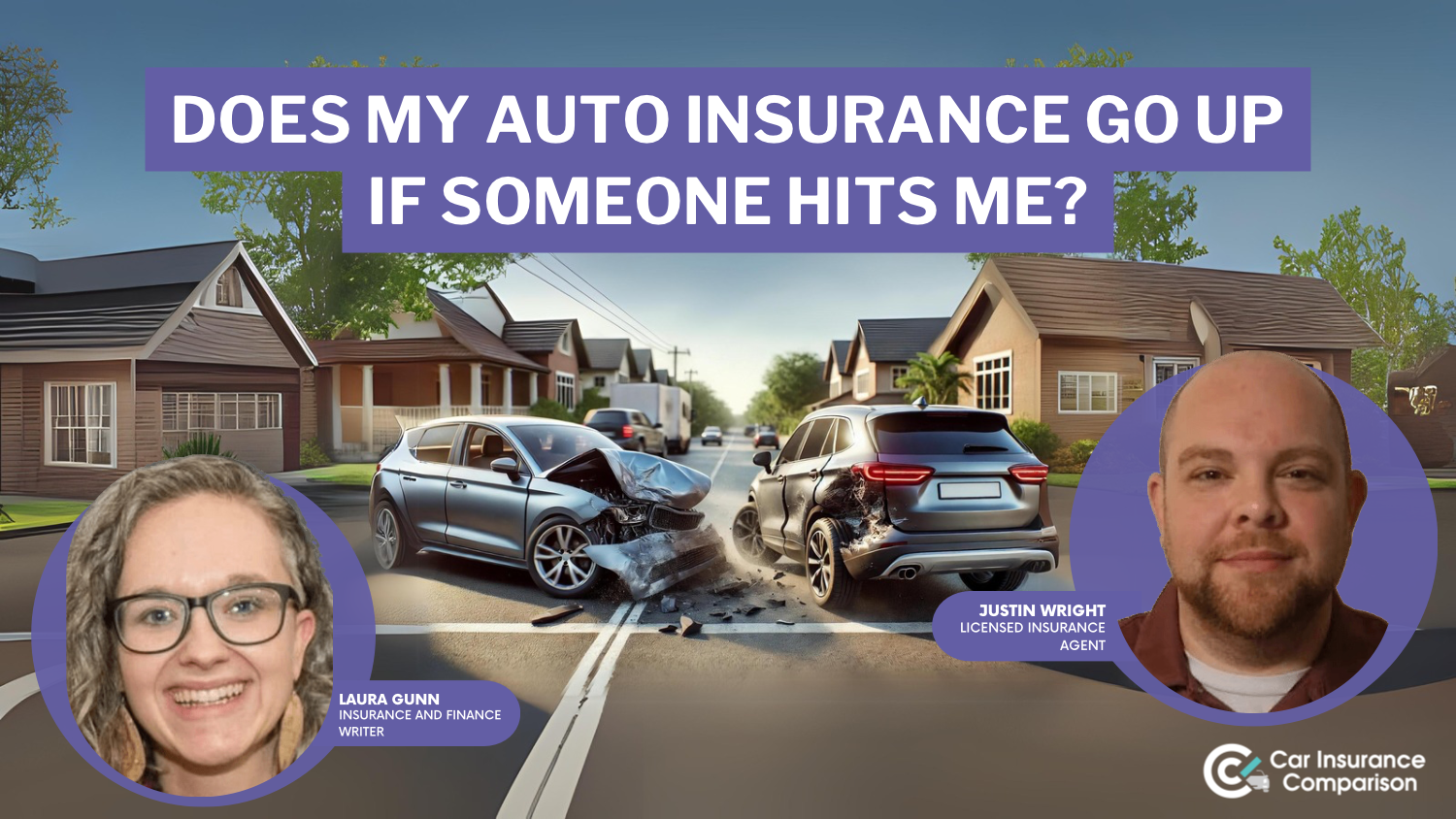
Upon any car accident, you must report it to your insurance company regardless of who is at fault.
No one wants to have a car accident but it is a fact of life that accidents do happen. It’s also a fact that accident history can affect your car insurance rates.
If you are in this particular situation, read on and answer these three important questions to figure out if your rates will rise.
Do you know how much coverage you need for car insurance? Make sure you’re covered if someone hits your car.
Be sure to use the FREE tool on this page to compare quotes for car insurance! You might be surprised by how much you could save.
- If someone hits me does my insurance go up? There are many variables in determining whether or not your insurance rates will rise if someone hits you.
- If the accident was not your fault, there is a good chance your insurance premiums will not be raised.
- If the accident was your fault, your rates will probably increase unless you have accident forgiveness on your policy.
#1. If someone hits my car will my insurance go up?
Who is at fault? What if someone else is at fault? What if they hit you? Will that still affect your rates?
Does hitting a parked car affect car insurance rates? or Does an accident in a parking lot affect car insurance rates, will my insurance go up?
Well, the safe is, “it depends.” Many factors weigh into this answer, including:
- Whether you live in an at-fault state or not
- Whether you have an insurance policy through a company that automatically raises rates after every claim
- Whether you were a careless driver and created a bad situation
- Things beyond a person’s control, such as mechanical failure, problems with the road they are traveling, weather-related conditions and so on. The U.S. DOT reports weather-related traffic statistics.
Regardless of the cause of an accident, if there is damage it is likely that all of the participants in the accident will need to contact their car insurance carriers to make a claim and to ensure that all of the damages are covered.
Does your car insurance go up if you get hit? That depends on who is found to be at-fault in the accident.
How does car insurance work when you are not at fault?
Usually, the first thing that will influence whether or not your insurance rates will go up after an accident is who is at fault for the accident. In order to determine fault, even in a no-fault state, the police or other authorities will assign blame for an accident.
This video goes over how fault is determined.
https://www.youtube.com/watch?v=ok_ZCuWpnno
While it may seem confusing, a no-fault state does not mean that no one takes the blame for an accident, only that no one can be sued for causing an accident unless the personal injury damages are extreme.
If you’re found to be at-fault, the table below shows how much your car insurance premium may increase after claim.
Car Insurance Rates After One At-Fault Accident
| Company | Clean record | With one accident |
|---|---|---|
 | $1,933.68 | $2,516.24 |
 | $2,145.96 | $3,192.77 |
 | $2,821.18 | $3,396.01 |
 | $2,693.61 | $3,722.75 |
 | $2,746.18 | $3,396.95 |
 | $3,393.09 | $4,777.04 |
 | $3,460.60 | $4,518.73 |
 | $3,447.69 | $4,289.74 |
 | $3,819.90 | $4,987.68 |
 | $4,774.30 | $6,204.78 |
How much would my insurance go up after an accident? With these major car insurers, your rates will raise anywhere from 24 to 49 percent.
Why does your insurance go up? If you’re found at fault for an accident, your insurer will see you as more high-risk.
Will insurance increase after a no-fault accident? It’s unlikely to increase if you are not found at-fault, though it can in some instances.
People who live in no-fault states, like Florida, are required to carry uninsured and underinsured motorist coverage and personal injury protection.
Many people think that simply because someone else strikes their vehicle that they aren’t at fault in an accident. That, however, is not necessarily true.
If it is found that you created a situation where a person cannot avoid striking your vehicle, you will be found at fault and it is your insurance that will increase.
This is the case even if you cause an accident to avoid striking someone else, unfortunately.
Read more:
- How do you deal with insurance after someone hits your parked car?
- What do I do if my car got rear ended?
Free Insurance Comparison
Compare Quotes From Top Companies and Save
#2. Who is your car insurance carrier?
What happens if somebody hit me? It’s usually straightforward, but it’s important to check with your car insurance company.
Another factor that will affect your insurance rates is your insurance carrier. There are several things to consider when reviewing your policy and deciding to stay with your current provider or switch.
Here are a couple situations you will want to know how your company will handle:
- Accident Forgiveness – If you cause an accident but you are with an insurance company that has an accident forgiveness policy for drivers who have never caused an accident before, you may get a pass from your insurance company. All that matters is that you meet their criteria for accident forgiveness.
- Number of Accidents – Another consideration that your insurance carrier might make is how many accidents you have been in, even if you have never been at fault. A person who makes a lot of claims is considered a higher risk.
There are some insurance companies that automatically raise insurance rates anytime a claim is made.
This possibility is something that you need to know about your insurance carrier because there are many insurance companies that don’t have this policy. If your insurance company does have this policy, you may want to consider switching insurance companies.
This simple fact will often put you in a position of paying more regardless of how well you drive. Part of the risk factor may be the area that you live in or the places that you have to drive through to get to work and so on.
#3. Was it a hit and run car accident?
There are incidences that occur that are completely out of your control. Hit-and-run accidents are one of them.
This type of accident can occur on the road or in places where you are away from your vehicle, such as a parking lot. Here are the steps you should follow:
- Decide whether or not to report to the police – Sometimes people wonder if the police will respond to a parking lot hit and run incident (many won’t). If the hit-and-run occurs while you are driving, you must call the police and get them involved if you need to file a claim.
- Make an insurance claim – Fortunately, most reputable insurance companies will accept a claim of a stationary hit and run without too much fuss, especially if you have never made such a claim before. If you file many hit-and-run claims your insurance company is going increase your insurance rates and may require more documentation.
Read more: Does an accident in a parking lot affect car insurance rates?
If someone hits you does your insurance go up if you don’t make a claim?
As you can see, having a good insurance carrier can make quite a bit of difference when it comes to whether or not you will see an increase in your insurance rates if someone hits your vehicle in an auto accident.
Choosing the right insurance carrier with great customer service and good policies is just as important as getting affordable rates.
You may find yourself paying more in the long run if you choose a company that has less than stellar policies regarding auto accidents.
The place to start when it comes to determining which insurance company is best for you is using a free quote tool. This will provide you a list of insurance companies along with the rates you can expect to pay for different levels of insurance.
You should take the time to do a little research on each of these companies and learn their policies. You should also check on how well they pay their claims and their customer service satisfaction rates, as well.
Read more: Compare Car Insurance Rates After an At-Fault Accident
Case Studies: Does My Car Insurance Go Up If Someone Hits Me?
Case Study 1: John’s Experience
John was driving home from work when another driver ran a red light and collided with his car. Thankfully, John was not at fault in the accident. He reported the incident to his insurance company, who assessed the damage and handled the claim. Since John was not responsible for the accident, his car insurance rates did not increase.
Case Study 2: Sarah’s Situation
Sarah parked her car outside her apartment building, and when she returned the next morning, she discovered that someone had hit her parked car and left without leaving any information. Sarah contacted her insurance company to report the hit-and-run incident. In this case, Sarah’s rates did not go up because she was not at fault for the accident and made a claim for the damages caused by an unknown driver.
Case Study 3: Mark’s Accident
Mark was driving on the highway when he accidentally rear-ended the car in front of him due to a momentary lapse in attention. He immediately reported the accident to his insurance company. Since Mark was at fault in the accident, his car insurance rates increased after the claim was processed.
Free Insurance Comparison
Compare Quotes From Top Companies and Save
Finding the Best Car Insurance Rates
Do insurance rates go up after no-fault accident?
For many drivers wondering, “if my car gets hit, does it affect my insurance?” or “does insurance go up if I’m not at fault?” The best methods for protecting themselves and ensuring the best coverage for their vehicle can be easily learned. Even in a single car accident, your insurance may be affected.
With an insurance rate quote tool, you can take the first steps to finding a car insurance company or replacing the one you currently have.
The process is fast and easy and you will find that in no time at all you will have found the perfect insurance company for your needs.
We can help you find car insurance companies that are right for you and can cover you if you get in an accident. Compare car insurance rates now by entering your ZIP code into the box below!
Understanding Hit-and-Run Incidents and Car Insurance
Navigating a hit-and-run incident can be daunting, especially when dealing with the aftermath and insurance implications. If someone has hit your parked car and left and you have insurance with Geico, it’s crucial to act swiftly. First, ensure your safety and assess the damage. Document the scene thoroughly, including any witness accounts or security camera footage if available.
Reporting the incident promptly to both the police and your insurance provider, like in the case of a car backed into me scenario, is essential. This helps initiate the claims process and provides a record for insurance purposes. Car insurance and accidents are intricately linked, particularly when it comes to hit-and-run situations. Insurance coverage varies, but generally, comprehensive insurance can cover damages from hit-and-run incidents, including hit-and-run car damage and hit-and-run on parked car scenarios.
However, understanding the specifics of your policy, such as whether hit-and-run insurance go up or if hit-and-run: will insurance increase, is crucial. Car insurance rates increased for no reason can be frustrating, but insurers base rate adjustments on factors like claim history and risk assessments. In cases where a hit-and-run involves no direct culprit identification, details like getting license plate information for a hit-and-run become critical.
This information aids authorities in locating the responsible party and helps facilitate insurance claims. Additionally, incidents like hitting a car door in a parking lot can lead to similar insurance procedures. Ultimately, staying informed about your coverage, promptly reporting incidents, and collaborating with authorities are vital steps to mitigate the impact of hit-and-run incidents on both your vehicle and insurance premiums.
Hit-and-Run Incidents: Insurance and Legal Considerations
Hit-and-run incidents can have significant repercussions both financially and legally. Understanding how insurance coverage applies and the legal implications involved is crucial for navigating these challenging situations. This guide explores the insurance implications of hit-and-run accidents, including coverage options and potential increases in premiums, alongside key legal considerations to help you prepare and respond effectively.
will insurance increase after a hit-and-run?
If you’re involved in a hit-and-run accident, whether you hit another vehicle or it’s your parked car that gets hit, insurance implications can vary. Typically, hit-and-run incidents can lead to increased insurance premiums, especially if you’re found at fault or cannot identify the responsible party.
Hit-and-Run on a Parked Car
A hit-and-run on a parked car can be frustrating. Insurance coverage for such incidents depends on your policy details. Most insurance companies provide coverage under collision or uninsured motorist property damage (UMPD) if the culprit is not identified or lacks insurance.
Geico’s Coverage of Hit-and-Run on Parked Cars
GEICO, like other insurers, typically covers hit-and-run incidents on parked cars under collision or UMPD coverage, depending on your policy terms. Contact GEICO directly or review your policy for specific coverage details.
Response When Someone Hits Your Parked Car
If someone hits your parked car and leaves, document the scene, gather evidence, and report the incident to your insurance company promptly. This ensures you can file a claim and possibly identify the responsible party.
High Point Insurance
High Point Insurance provides coverage options that may include hit-and-run incidents. Review your policy or contact them for details specific to your coverage.
Hit-and-Run Laws in PA
Pennsylvania’s hit-and-run laws mandate reporting accidents involving injury, death, or property damage immediately. Familiarize yourself with local laws and ensure compliance to avoid legal repercussions.
Free Insurance Comparison
Compare Quotes From Top Companies and Save
Dealing with Various Car Accidents and Insurance Implications
When facing car accidents like hitting a car door in a parking lot, knowing the right steps to take can prevent potential disputes and ensure a smoother insurance process. It’s important to exchange information with the other party involved and document the scene thoroughly, including photos of the damage and any relevant details. Reporting the incident to your insurance company promptly, especially in cases like hit-and-run and filing a police report, is crucial to initiate the claims process and determine coverage eligibility.
Understanding how car insurance premiums may be affected is vital, particularly after a claim. Car insurance premium increase after a claim is a common concern, as insurers often adjust rates based on the perceived risk of future claims.
Similarly, questions such as I got rear-ended: will my insurance rates go up are valid concerns for many drivers. Insurance companies assess fault and accident history to determine rate adjustments, which can vary based on individual policies and state regulations. In scenarios where you’re involved in an accident, whether you’re the victim of a hit-and-run or someone hit your brand new car, knowing your rights and responsibilities is essential.
If you’ve been involved in a hit-and-run incident and are wondering about hit-and-run: does insurance go up, understanding your policy coverage and promptly reporting the incident are key. Likewise, if someone hit me, what should I do involves similar steps: gather information, report to authorities, and notify your insurance provider. These proactive measures can help protect your interests and ensure a smoother claims process.
Case Studies: Does My Car Insurance Go Up If Someone Hits Me
Case Study 1: John’s Experience
John was driving home from work when another driver ran a red light and collided with his car. Thankfully, John was not at fault in the accident. He reported the incident to his insurance company, who assessed the damage and handled the claim. Since John was not responsible for the accident, his car insurance rates did not increase.
Case Study 2: Sarah’s Situation
Sarah parked her car outside her apartment building, and when she returned the next morning, she discovered that someone had hit her parked car and left without leaving any information. Sarah reported a hit-and-run to her insurance, but her rates stayed the same since she wasn’t responsible and filed a claim for the damages caused by an unknown driver.
Case Study 3: Mark’s Accident
Mark was driving on the highway when he accidentally rear-ended the car in front of him due to a momentary lapse in attention. He immediately reported the accident to his insurance company. Since Mark was at fault in the accident, his car insurance rates increased after the claim was processed.
Frequently Asked Questions
Does my insurance go up if someone hits me?
Generally, if someone else is at fault for hitting your car, your insurance rates may not increase. It depends on your insurer’s policies and the circumstances of the accident.
Will my Geico insurance go up if someone hits me?
GEICO and other insurers generally do not increase your rates if someone else hits you and they are at fault. However, it’s always best to check your specific policy details.
Does your insurance increase after someone hits you?
In most cases, your insurance rates should not increase if you are not at fault for the accident. However, it can vary based on your insurance company and their policies.
If someone hits your car, does your insurance go up?
Your insurance rates typically do not go up if someone else is at fault and hits your car. This is because their insurance should cover the damages.
If someone hits your car, does it affect your insurance?
Generally, if you are not at fault for the accident, it should not affect your insurance rates. However, it’s important to report the incident to your insurer.
If you get hit, does your insurance go up?
Your insurance rates should not increase if you are not at fault for the accident and the other driver’s insurance covers the damages.
Can someone get your insurance info from your license plate?
License plates generally do not provide access to personal insurance information. This information is typically private and protected.
Can you file a claim without insurance?
If you do not have insurance, you may face challenges in getting compensation for damages. It’s crucial to have insurance to protect yourself financially in case of accidents.
Can you get someone’s insurance information from their license plate?
Generally, license plates do not provide direct access to someone’s insurance information. You may need to exchange information directly with the other driver.
If someone crashes into me, does it affect my insurance?
If you are not at fault, the accident should not impact your insurance rates. However, it’s important to report the incident to your insurer for documentation.
If someone crashes into me, does my insurance go up?
What happens if you don’t report an accident within 24 hours?
What happens if you get hit without insurance?
What happens if you get in a car accident?
What happens if you hit a pedestrian not in a crosswalk?
What happens to your insurance when you hit a car?
Will my insurance go up if I rear-ended someone?
Will my insurance go up if I report a hit-and-run?
Will my insurance go up if I am a victim of a hit-and-run?
Will my insurance go up if I was rear-ended?
How long to report the accident to Geico insurance?
How many accidents before insurance drops you?
How much does your insurance go up after an accident?
How much does car insurance go up after a claim?
How much does car insurance go up after a ticket?
How much will my insurance go up with an at-fault accident?
How much will my insurance increase if my teenager has an accident?
Related Articles
-
Nov 2023

Good Credit Car Insurance Discounts [2026]
-
Nov 2023

Car Insurance PIP Waiver: Explained Simply
-
Oct 2026

10 Best Usage-Based Car Insurance Companies [2026]
-
Nov 2024
Can a car be parked on a public road with no insurance?
-
Nov 2024
Does a negligent driving ticket affect car insurance rates?
-
Nov 2024
Can I get an insurance quote without a car?

Get a FREE Quote in Minutes
Insurance rates change constantly — we help you stay ahead by making it easy to compare top options and save.